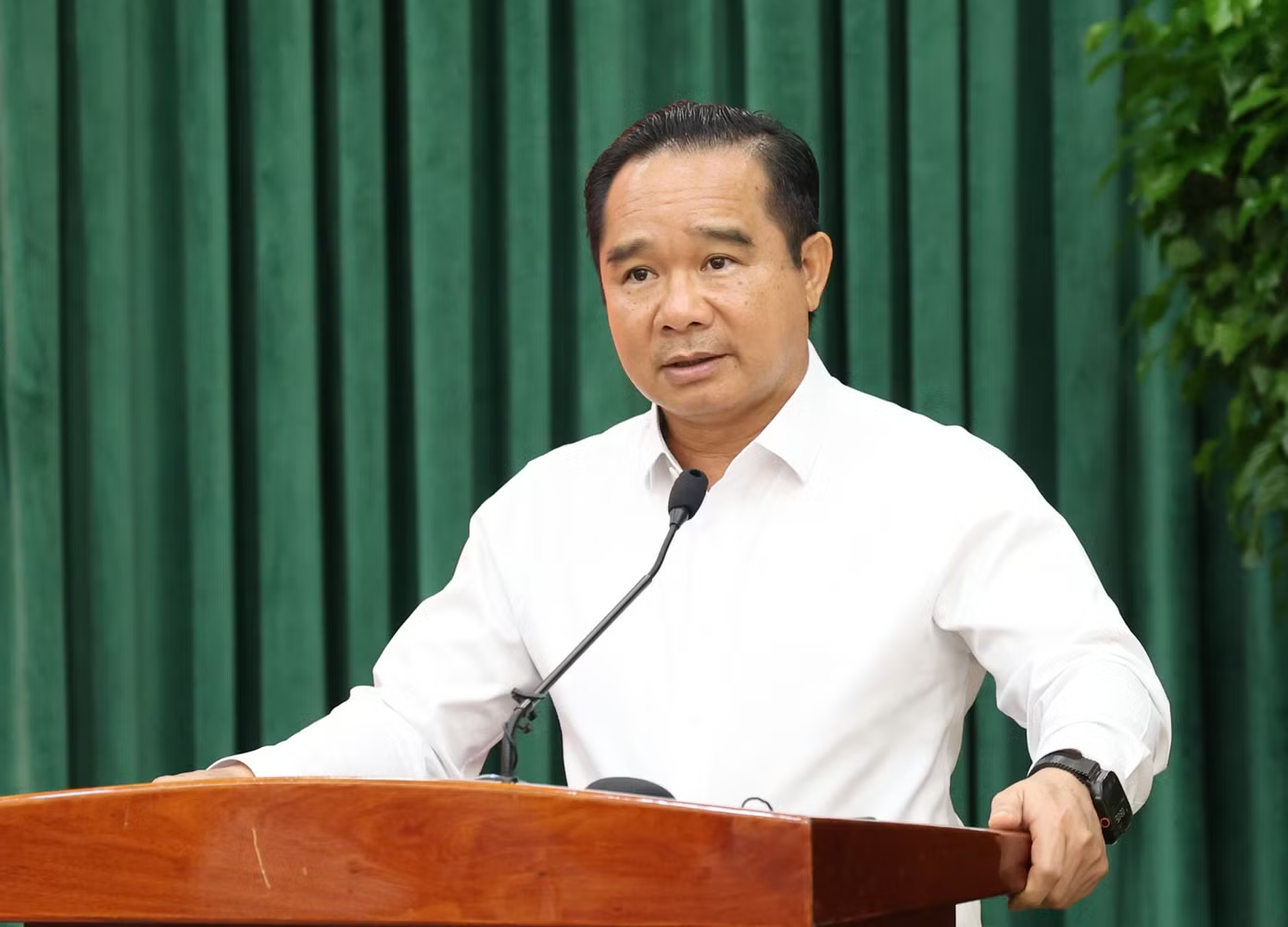
According to Ho Chi Minh City People's Committee Chairman Nguyen Van Duoc, the completion of three major seaport projects, together with stronger connectivity to the Cai Mep - Thi Vai port cluster, could provide Ho Chi Minh City with a foundation to become a leading maritime transport hub in Vietnam and strengthen its position within Southeast Asia and the wider Asian region.
At the fourth extended conference of the Party Committee of the Ho Chi Minh City People's Committee on July 8, 2026, Chairman Nguyen Van Duoc discussed the city's socio-economic performance during the first six months of the year and outlined key priorities for the second half of 2026.
According to the Chairman, Ho Chi Minh City has recently received investment for three large-scale seaport projects, creating new momentum for the development of maritime infrastructure and logistics. One project has already commenced construction, another is expected to break ground in the third quarter, while investment procedures for the remaining project are expected to be completed in July.
Ho Chi Minh City has the advantage of being located along an important international maritime route through which approximately 50% of global cargo passes. If the city anticipates future opportunities and invests in the right direction, Vietnam's economy could achieve stronger growth, with Ho Chi Minh City positioned to benefit significantly from that development.
— Nguyen Van Duoc, Chairman of the Ho Chi Minh City People's Committee
Reshaping the Seaport Network
Beyond expanding overall port capacity, Ho Chi Minh City is also preparing to restructure its seaport network. The proposed direction would gradually concentrate cargo-handling activities around major gateway port areas, particularly the Cai Mep - Thi Vai deep-water port cluster.
Under the plan being studied, cargo ports located within densely populated urban areas could be progressively relocated, while selected transshipment facilities would remain to support logistics activities within the city.
Such a transition could help reduce the number of container trucks entering central urban areas, ease pressure on road infrastructure, limit environmental impacts and improve the efficiency of valuable urban land use.
Building Stronger Gateway Port Infrastructure
A major advantage for Ho Chi Minh City's maritime development is its connection with the Cai Mep - Thi Vai port cluster. The deep-water port system is capable of accommodating large container vessels and provides direct access to a number of international shipping routes.
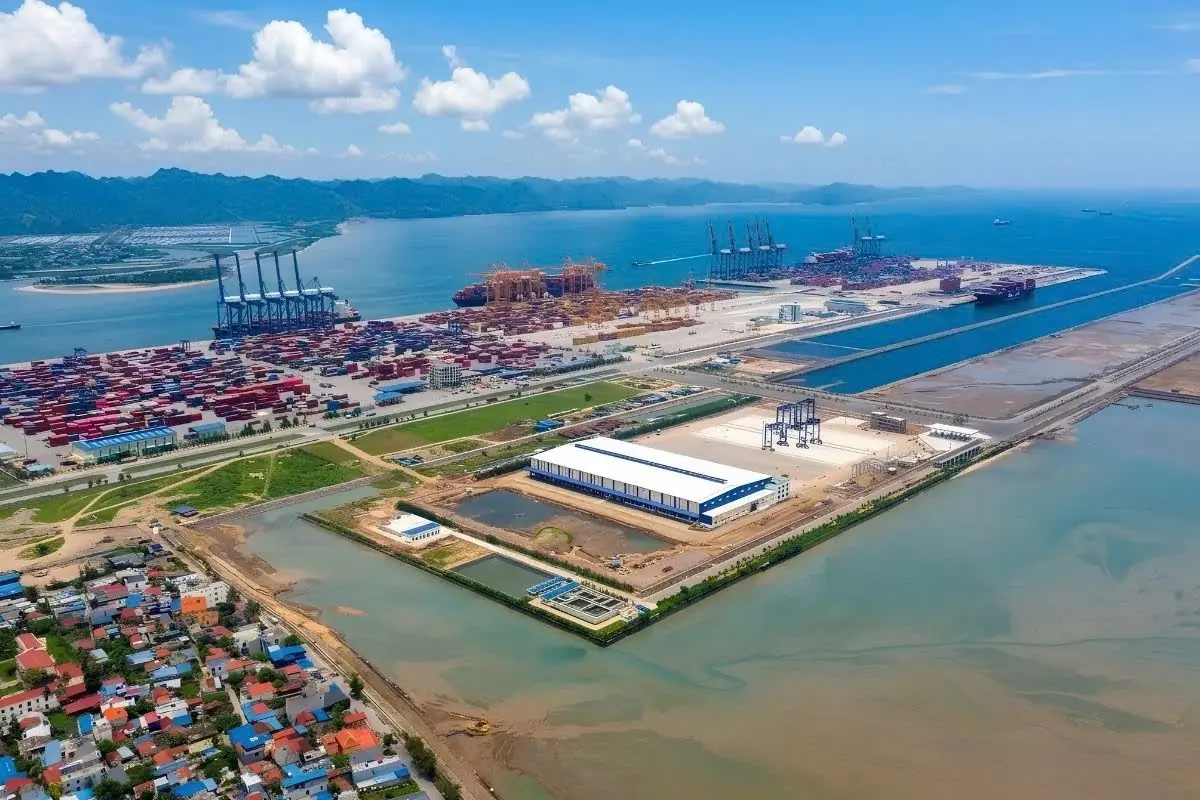
Concentrating a larger share of cargo-handling activities at deep-water gateway ports could improve vessel-handling efficiency while creating better conditions for connections between seaports, inland transport networks, warehouses and logistics centers.
This integrated approach is expected to help improve supply-chain efficiency and potentially reduce logistics costs for businesses, while providing the infrastructure required to accommodate larger volumes of international trade.
The combination of deep-water port capacity, international shipping connectivity and a broader logistics network provides an important foundation for Ho Chi Minh City to expand its role within regional and global maritime supply chains.
Towards an Integrated Logistics Ecosystem
Seaport development is only one part of the city's broader growth strategy. City leaders have also emphasized the coordinated development of logistics services, transport infrastructure, warehousing, a free trade zone, an international financial center, digital transformation and innovation.
Better integration between seaports and these supporting systems could enable cargo to move more efficiently throughout the supply chain, creating a more competitive logistics environment and supporting sustainable economic growth over the long term.
Growing Demand for Port Equipment and Technology
The expansion and modernization of seaport infrastructure is also expected to increase demand for more advanced cargo-handling equipment, automation solutions and technologies that can improve operational efficiency, reliability and safety.
For companies operating in mechanical engineering, manufacturing and port equipment, this trend could create new opportunities to contribute to the modernization of Vietnam's maritime infrastructure and meet increasingly demanding technical requirements across the logistics sector.
Long-Term Development Potential
As international trade continues to expand and freight transportation demand increases, the combination of large-scale seaport investment and a restructured port network could provide Ho Chi Minh City with significant long-term development opportunities.
If these projects are implemented on schedule and supported by coordinated transport and logistics infrastructure, the city could further strengthen its position as a major logistics gateway, attract new investment and reinforce its role as one of Vietnam's leading economic centers.
According to Ho Chi Minh City People's Committee Chairman Nguyen Van Duoc, the completion of three major seaport projects, together with stronger connectivity to the Cai Mep - Thi Vai port cluster, could provide Ho Chi Minh City with a foundation to become a leading maritime transport hub in Vietnam and strengthen its position within Southeast Asia and the wider Asian region.
At the fourth extended conference of the Party Committee of the Ho Chi Minh City People's Committee on July 8, 2026, Chairman Nguyen Van Duoc discussed the city's socio-economic performance during the first six months of the year and outlined key priorities for the second half of 2026.
According to the Chairman, Ho Chi Minh City has recently received investment for three large-scale seaport projects, creating new momentum for the development of maritime infrastructure and logistics. One project has already commenced construction, another is expected to break ground in the third quarter, while investment procedures for the remaining project are expected to be completed in July.
Ho Chi Minh City has the advantage of being located along an important international maritime route through which approximately 50% of global cargo passes. If the city anticipates future opportunities and invests in the right direction, Vietnam's economy could achieve stronger growth, with Ho Chi Minh City positioned to benefit significantly from that development.
— Nguyen Van Duoc, Chairman of the Ho Chi Minh City People's Committee
Reshaping the Seaport Network
Beyond expanding overall port capacity, Ho Chi Minh City is also preparing to restructure its seaport network. The proposed direction would gradually concentrate cargo-handling activities around major gateway port areas, particularly the Cai Mep - Thi Vai deep-water port cluster.
Under the plan being studied, cargo ports located within densely populated urban areas could be progressively relocated, while selected transshipment facilities would remain to support logistics activities within the city.
Such a transition could help reduce the number of container trucks entering central urban areas, ease pressure on road infrastructure, limit environmental impacts and improve the efficiency of valuable urban land use.
Building Stronger Gateway Port Infrastructure
A major advantage for Ho Chi Minh City's maritime development is its connection with the Cai Mep - Thi Vai port cluster. The deep-water port system is capable of accommodating large container vessels and provides direct access to a number of international shipping routes.
Concentrating a larger share of cargo-handling activities at deep-water gateway ports could improve vessel-handling efficiency while creating better conditions for connections between seaports, inland transport networks, warehouses and logistics centers.
This integrated approach is expected to help improve supply-chain efficiency and potentially reduce logistics costs for businesses, while providing the infrastructure required to accommodate larger volumes of international trade.
The combination of deep-water port capacity, international shipping connectivity and a broader logistics network provides an important foundation for Ho Chi Minh City to expand its role within regional and global maritime supply chains.
Towards an Integrated Logistics Ecosystem
Seaport development is only one part of the city's broader growth strategy. City leaders have also emphasized the coordinated development of logistics services, transport infrastructure, warehousing, a free trade zone, an international financial center, digital transformation and innovation.
Better integration between seaports and these supporting systems could enable cargo to move more efficiently throughout the supply chain, creating a more competitive logistics environment and supporting sustainable economic growth over the long term.
Growing Demand for Port Equipment and Technology
The expansion and modernization of seaport infrastructure is also expected to increase demand for more advanced cargo-handling equipment, automation solutions and technologies that can improve operational efficiency, reliability and safety.
For companies operating in mechanical engineering, manufacturing and port equipment, this trend could create new opportunities to contribute to the modernization of Vietnam's maritime infrastructure and meet increasingly demanding technical requirements across the logistics sector.
Long-Term Development Potential
As international trade continues to expand and freight transportation demand increases, the combination of large-scale seaport investment and a restructured port network could provide Ho Chi Minh City with significant long-term development opportunities.
If these projects are implemented on schedule and supported by coordinated transport and logistics infrastructure, the city could further strengthen its position as a major logistics gateway, attract new investment and reinforce its role as one of Vietnam's leading economic centers.